
 Discover in Algeria
 Business in Algeria

 Login
Are you an official representative of the Government of Algeria? Please contact us at gov.support@tribeafrica.org to submit updates or corrections to this page.
National Parks & Reserves
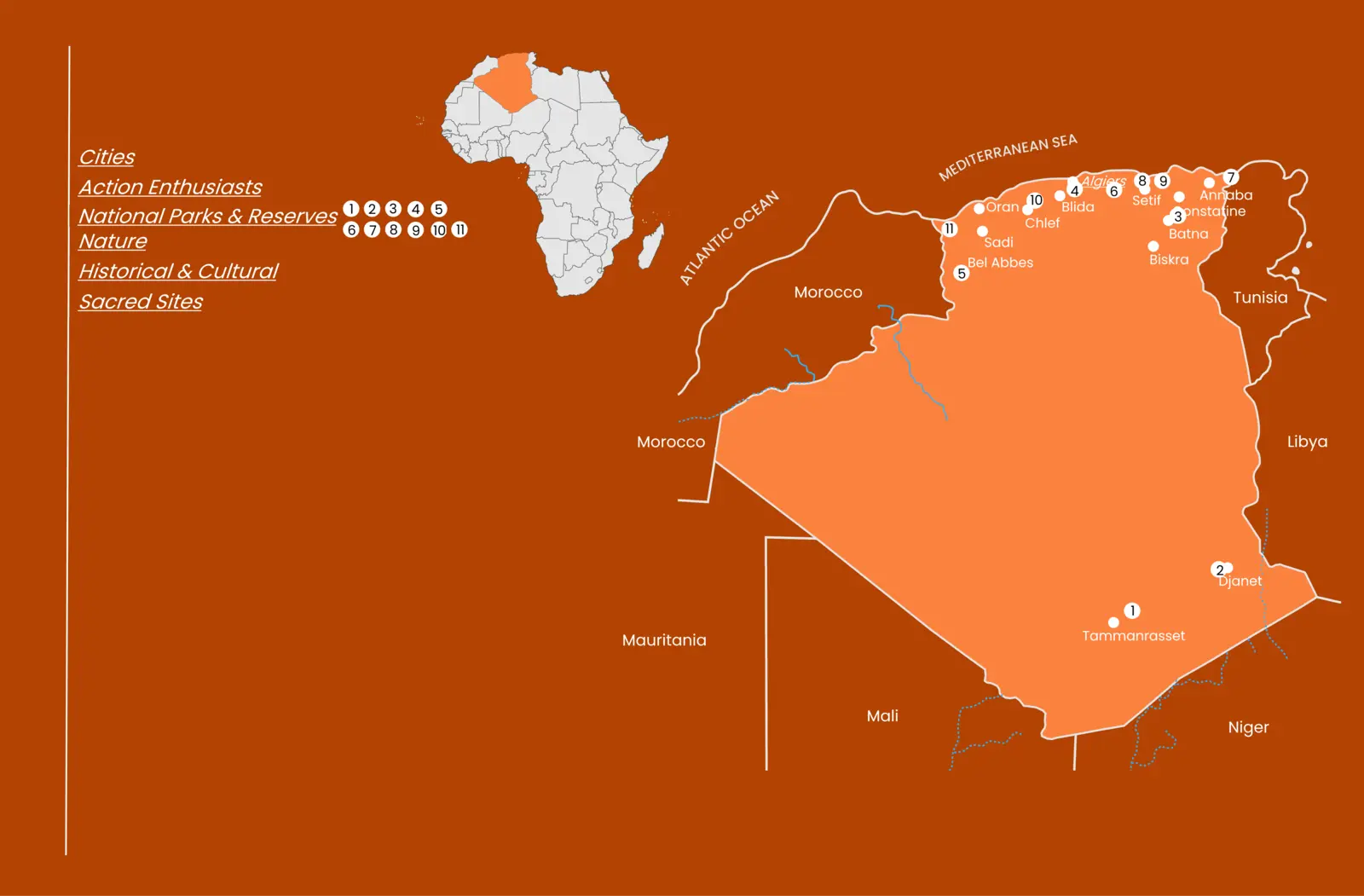
Ahaggar National Park (1) Covers the central Saharan highlands of southern Algeria, where the massive Hoggar Mountains rise from a sea of desert near the city of Tamanrasset, roughly 1,500 kilometers (932 miles) south of Algiers. Spanning about 450,000 square kilometers (173,745 square miles), this is one of the largest protected areas in Africa.
The park shelters an extraordinary mix of geological formations, volcanic peaks, and deep valleys. Dorcas gazelles, fennec foxes, and Barbary sheep inhabit the arid plateaus, while Tuareg pastoralists continue their nomadic traditions across this harsh landscape.
Though isolated, the region faces threats from climate change and illegal hunting. Sustained protection efforts could ensure the future of this vast desert ecosystem and its cultural legacy.
Tassili n’Ajjer National Park (2) Lies in southeastern Algeria, not far from the Libyan border, stretching across 72,000 square kilometers (27,799 square miles) of sandstone plateaus. The park is accessible via the oasis town of Djanet, roughly 2,000 kilometers (1,243 miles) from Algiers.
Renowned for its surreal landscapes and over 15,000 prehistoric rock engravings, the area is a UNESCO World Heritage Site and a living museum of humanity’s ancient relationship with the desert.
Fauna includes small desert-adapted mammals, while migratory birds occasionally visit hidden gueltas. Though few large animals remain, the park’s rich cultural and geological heritage makes it one of Algeria’s most remarkable protected spaces.
Belezma National Park (3) Sits in the Aurès Mountains, near the town of Batna, approximately 430 kilometers (267 miles) east of Algiers. Covering 262 square kilometers (101 square miles), the park forms part of the transitional zone between mountainous terrain and the steppe.
It preserves one of the northernmost populations of Atlas cedar, along with oak woodlands and juniper groves. Wild boars, jackals, and several bird species roam this varied landscape.
Belezma’s biodiversity is under pressure from overgrazing and deforestation, but its manageable size offers potential for sustainable conservation programs rooted in community engagement and ecological restoration.
Chréa National Park (4) Nestled in the Blida Atlas Mountains, approximately 50 kilometers (31 miles) south of Algiers, Chréa National Park spans around 260 square kilometers (100 square miles). The park is renowned for its dense cedar and oak forests, which provide a habitat for the endangered Barbary macaque. In winter, the area transforms into a snowy retreat, attracting visitors to its ski slopes. Despite its proximity to urban areas, Chréa faces challenges like deforestation and unregulated tourism. However, its accessibility and natural beauty make it a prime candidate for sustainable eco-tourism initiatives.
Djebel Aïssa National Park (5) Located in the Naâma Province of western Algeria, Djebel Aïssa National Park covers an area of about 244 square kilometers (94 square miles). The park encompasses steppe landscapes and mountainous terrains, offering a refuge for species like the Barbary sheep and various raptors. The semi-arid climate and overgrazing have led to land degradation, posing challenges for conservation. Efforts are underway to rehabilitate the ecosystem and promote sustainable land use practices.
Djurdjura National Park (6) Situated in the Kabylie region, approximately 150 kilometers (93 miles) east of Algiers, Djurdjura National Park spans around 185 square kilometers (71 square miles). The park is characterized by its rugged limestone peaks, deep gorges, and dense forests. It serves as a critical habitat for the Barbary macaque and numerous bird species. While the park attracts hikers and nature enthusiasts, it faces threats from illegal logging and habitat fragmentation. Strengthening conservation measures and community engagement are vital for its preservation.
El Kala National Park (7) Located in the northeastern corner of Algeria, near the Tunisian border, El Kala National Park covers approximately 800 square kilometers (309 square miles). The park boasts a diverse range of ecosystems, including wetlands, forests, and coastal areas. It's home to several Ramsar-listed sites and supports species like the European otter and various migratory birds. Urban development and pollution pose significant threats to its delicate habitats. Integrated management approaches are essential to balance conservation with local development needs.
Gouraya National Park (8) Situated along the Mediterranean coast near the city of Béjaïa, Gouraya National Park encompasses about 20 square kilometers (8 square miles). Despite its small size, the park is rich in biodiversity, featuring coastal cliffs, forests, and marine environments. It provides a sanctuary for the endangered Barbary macaque and various seabirds. Coastal erosion and human encroachment threaten its ecosystems. Conservation efforts focus on habitat restoration and promoting eco-tourism to support local economies.
Taza National Park (9) Located in the Jijel Province of northeastern Algeria, Taza National Park spans approximately 38 square kilometers (15 square miles). The park features a mix of karst landscapes, caves, and dense forests. It's a haven for species like the Algerian nuthatch and various bat species. Deforestation and unregulated tourism activities pose challenges to its conservation. Implementing sustainable tourism practices and environmental education programs are key to its protection.
Théniet El Had National Park (10) Situated in the Tissemsilt Province, about 200 kilometers (124 miles) southwest of Algiers, Théniet El Had National Park covers around 34 square kilometers (13 square miles). The park is known for its Atlas cedar forests and diverse flora and fauna. It serves as a vital water catchment area and supports species like the wild boar and various birds of prey. Threats include illegal logging and climate change impacts. Conservation strategies focus on reforestation and community involvement in park management.
Tlemcen National Park (11) Located in the northwestern part of Algeria, near the city of Tlemcen, the park spans approximately 82 square kilometers (32 square miles). It encompasses a variety of landscapes, including forests, waterfalls, and caves. The park is rich in cultural heritage, featuring historical sites like the ancient Mansourah ruins. Urban expansion and tourism pressures threaten its integrity. Efforts are being made to integrate cultural preservation with environmental conservation to ensure the park's sustainability.
Nature
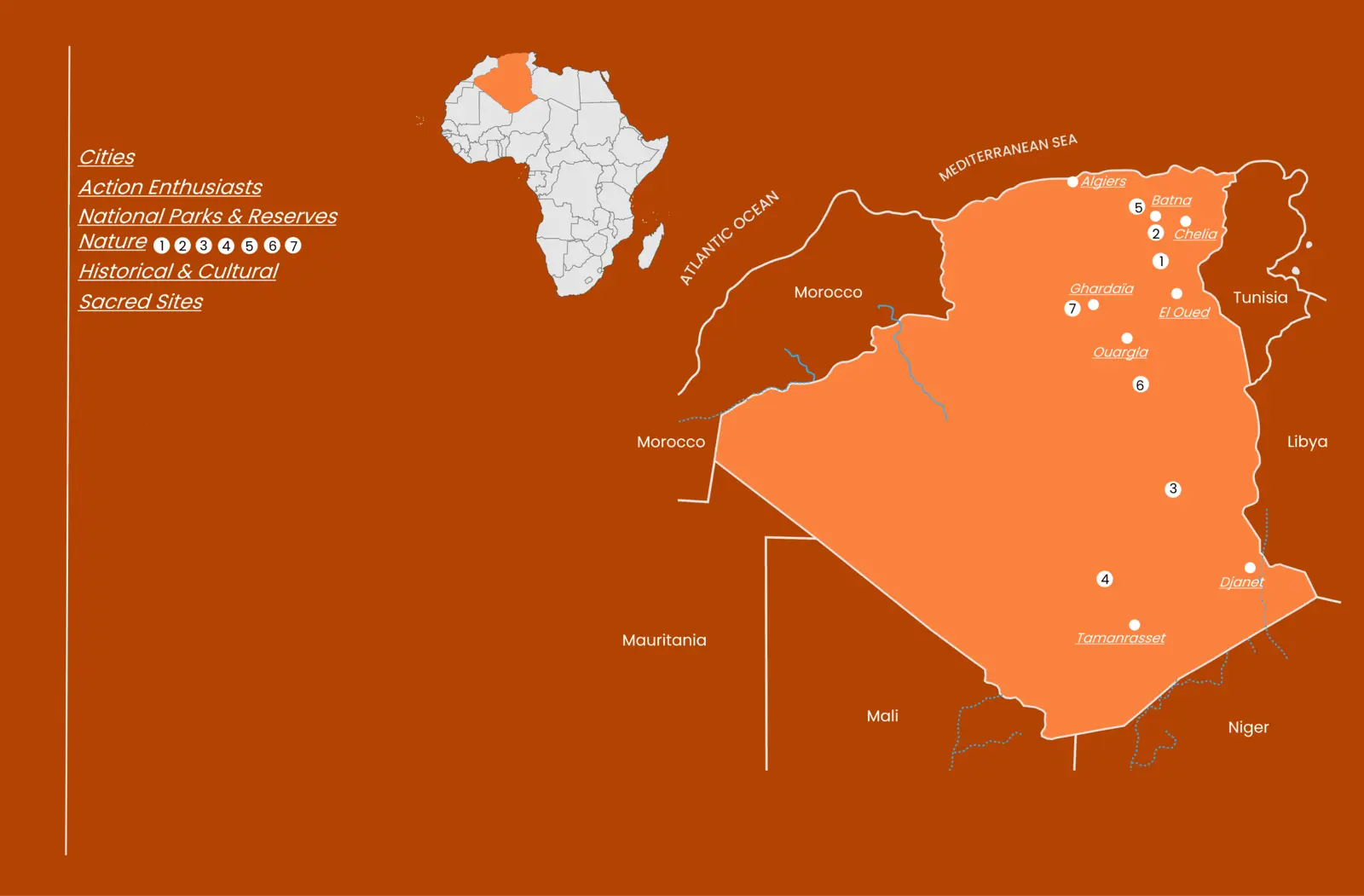
The Aurès Mountains (1) -The Aurès Mountains offer a peaceful retreat, where visitors can trek through lush valleys, visit traditional Berber villages, and immerse themselves in the region’s rich cultural heritage. This mountainous terrain is perfect for both adventure and relaxation.
Chelia National Park (2) - Chelia National Park is a paradise for nature lovers, home to diverse wildlife, including the endangered Barbary macaque. With its stunning landscapes and ideal hiking trails, it serves as a critical conservation area.
Tassili n'Ajjer National Park (3) - Tassili n'Ajjer National Park unveils surreal rock formations, canyons, and ancient cave paintings. A UNESCO World Heritage Site, it invites adventurers to explore prehistoric art while hiking through breathtaking canyons.
Ahaggar National Park (4) - Ahaggar National Park showcases the dramatic volcanic peaks and plateaus of the Ahaggar Mountains, a rugged landscape perfect for trekking. Visitors can encounter nomadic Berber communities and connect deeply with nature.
Belezma National Park (5) - Belezma National Park offers lush greenery and tranquil walks, providing a peaceful environment where rare bird species thrive among the forested landscapes.
Grand Erg Oriental (6) - Grand Erg Oriental promises exhilarating experiences with sandboarding, Bedouin camps, and stunning sunsets over vast desert plains. Hidden oases and starry skies create an unforgettable desert adventure.
M'Zab Valley (7) - M'Zab Valley a UNESCO World Heritage Site, is a unique oasis featuring fortified villages and traditional architecture, offering a serene glimpse into the region’s way of life.
Share Your Experience with the Tribe!
Share your photos, tell your story, and relieve your unforgettable memories.
We’d love to see your favourite moments and hear about your adventures exploring Algeria’s incredible tourist destinations. Whether you’ve discovered breathtaking landscapes, wandered through historic sites, experienced vibrant local culture, or met wonderful people along the way, your story deserves to be shared.
Inspire others to explore, discover, and experience the beauty of Algeria through your eyes.
Let your journey spark the desire for others to discover the wonders of Algeria.